

How can sports surfaces become more sustainable without compromising performance?

Multipurpose court at Inselpark Hamburg
Hamburg, Germany
Project profile
2026
approx. 420 m²
1–4 mm
- Multifunctional sports area embedded in a diverse urban park landscape
- 5,700 kg of GEZOFLEX eco across 420 m², used for the first time on a multipurpose court in Germany
- Approximately 3.9 metric tons of greenhouse gas emissions avoided compared to the GEZOFLEX standard, based on indicative PCF values
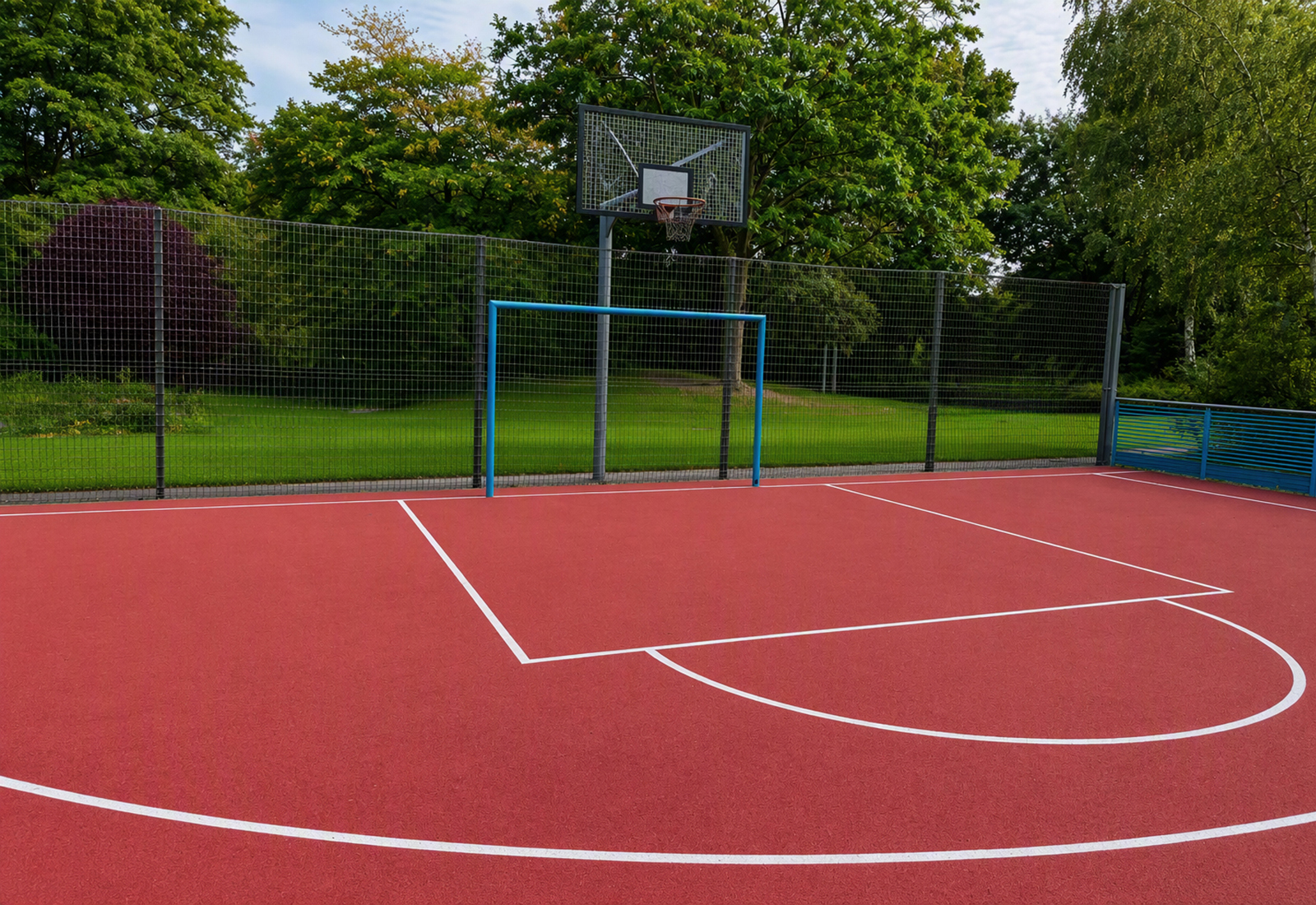
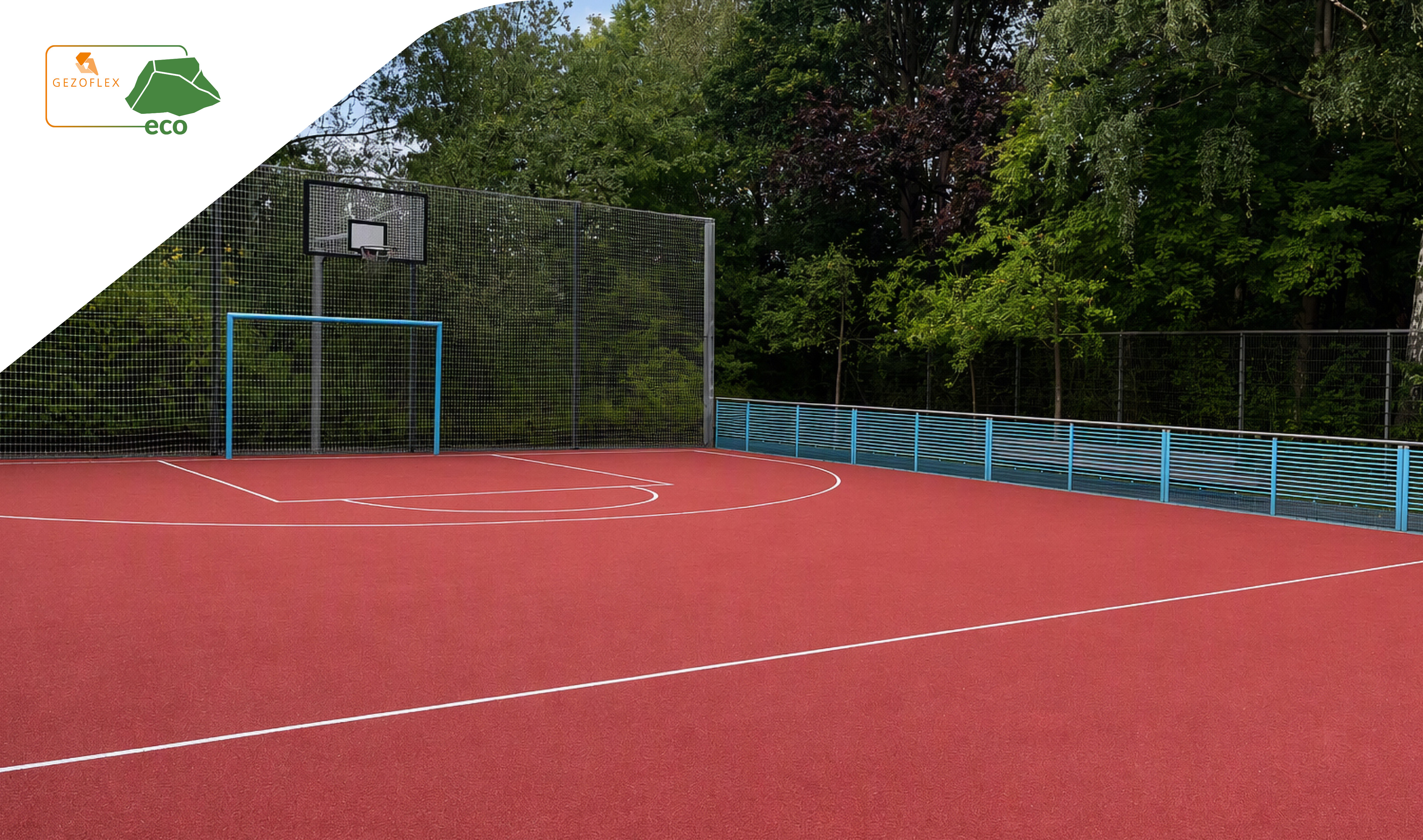
The new multifunctional sports court at Wilhelmsburger Inselpark in Hamburg demonstrates the potential of making conscious material choices: By using our sustainable GEZOFLEX eco EPDM granules across 420 m², around 3.9 metric tons of greenhouse gas emissions were avoided.
Wilhelmsburger Inselpark is at the heart of one of Hamburg’s most ambitious urban development projects. Created as part of the 2013 International Garden Show, the park has since become a green centerpiece of the Wilhelmsburg district. Covering approximately 100 hectares, it combines natural and recreational spaces with a wide range of opportunities for sports, play, and physical activity.
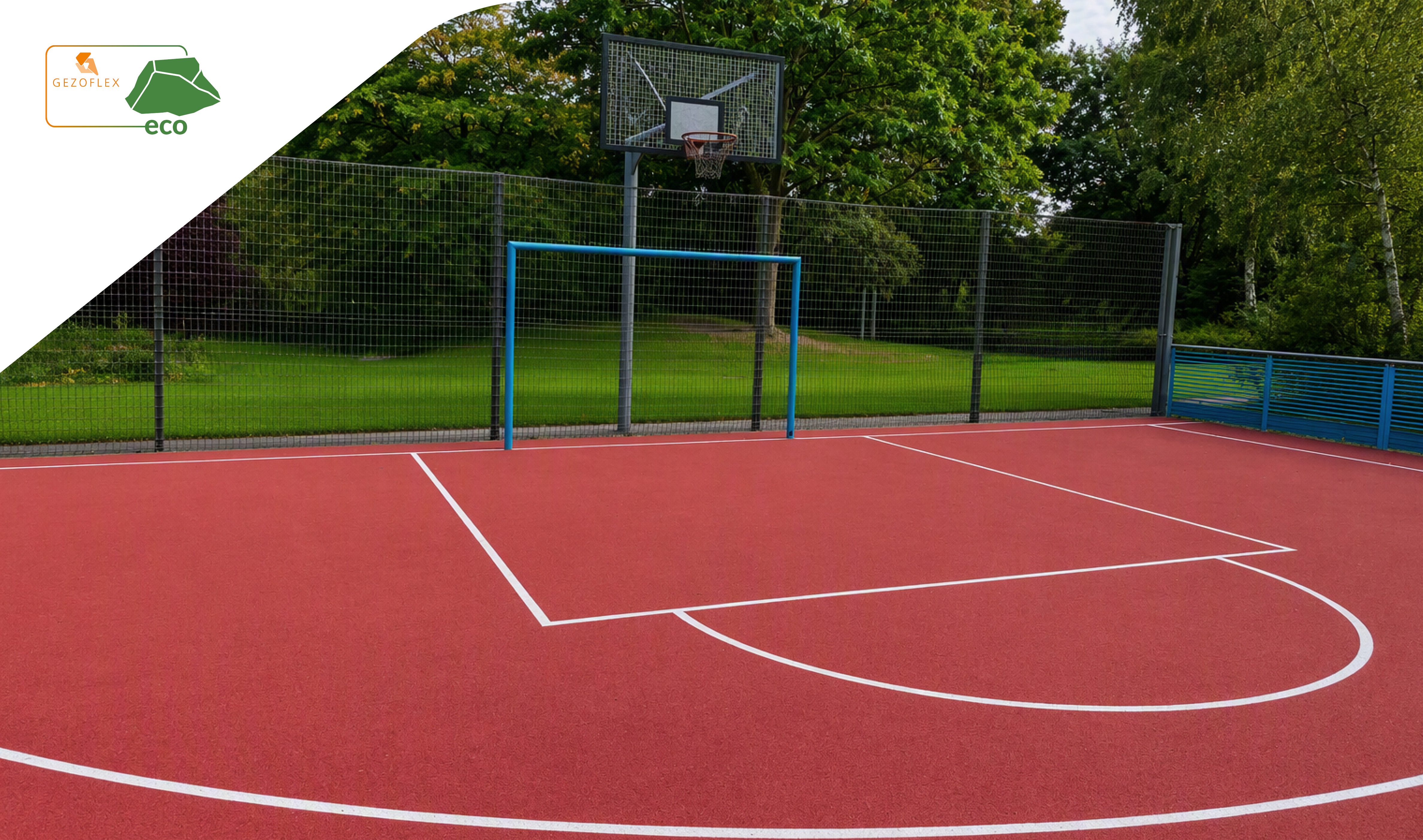
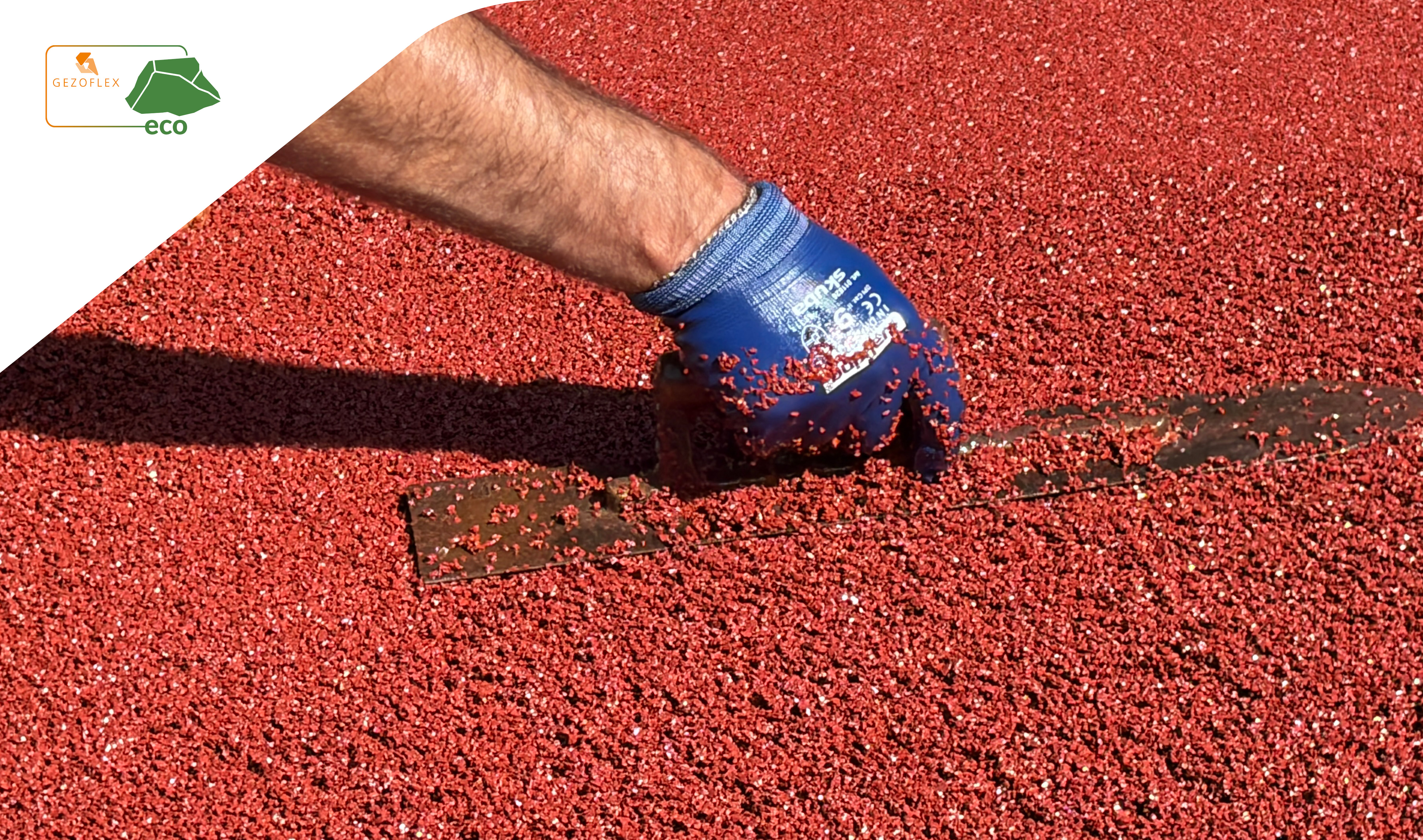
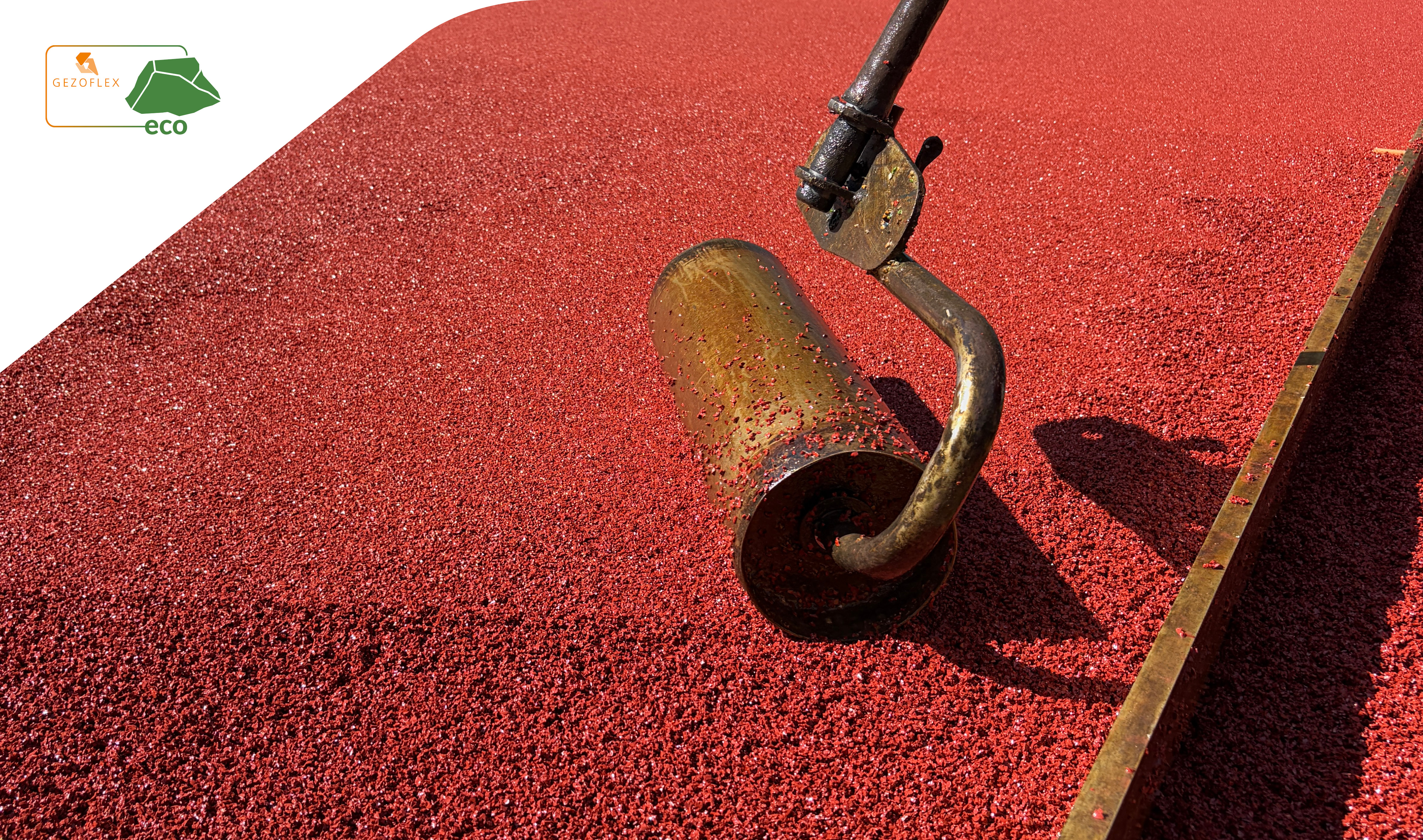
Since September 2026, this urban setting has included a new 420 m² multifunctional sports court (single layer, 20 mm). With its soccer goals, basketball hoops, and brick-red surface, it looks much like a conventional small-sided sports court. What sets it apart, however, is the material used: For the first time in Germany, our sustainable GEZOFLEX eco EPDM granules were used for a small-sided sports court.
Greater sustainability without compromising performance
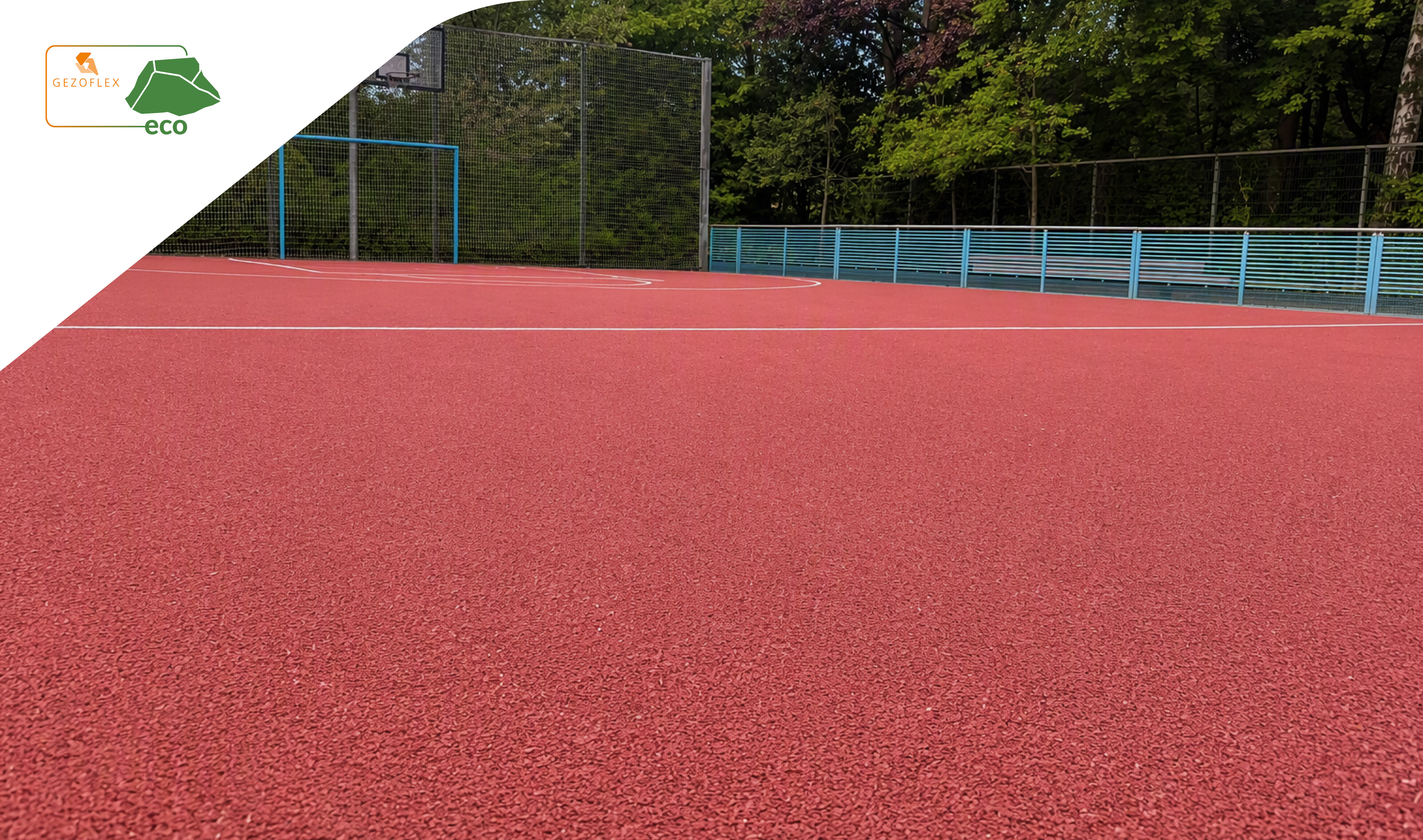
GEZOFLEX eco was developed with the goal of combining the proven properties of a high-quality EPDM granule with a significantly better sustainability profile.
The sustainability of GEZOFLEX eco is based on three key characteristics:
- GEZOFLEX eco consists of > 90 % sustainable raw materials, the sustainability of which has been verified in various ways.
- Compared to conventional EPDM granules, GEZOFLEX eco generates over 70% fewer CO₂ emissions.
- With a 34% content of bio-based raw materials, GEZOFLEX eco is the only EPDM granule certified as bio-based.
Nearly four metric tons of greenhouse gas emissions avoided on 420 m²
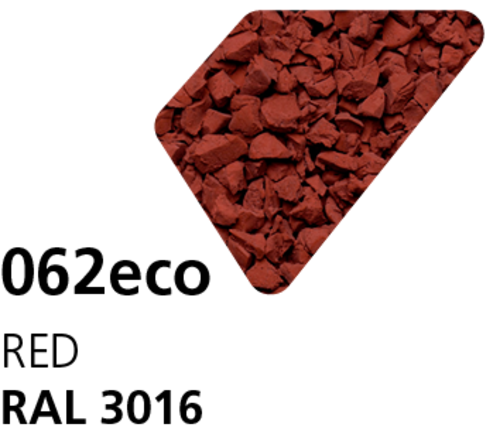
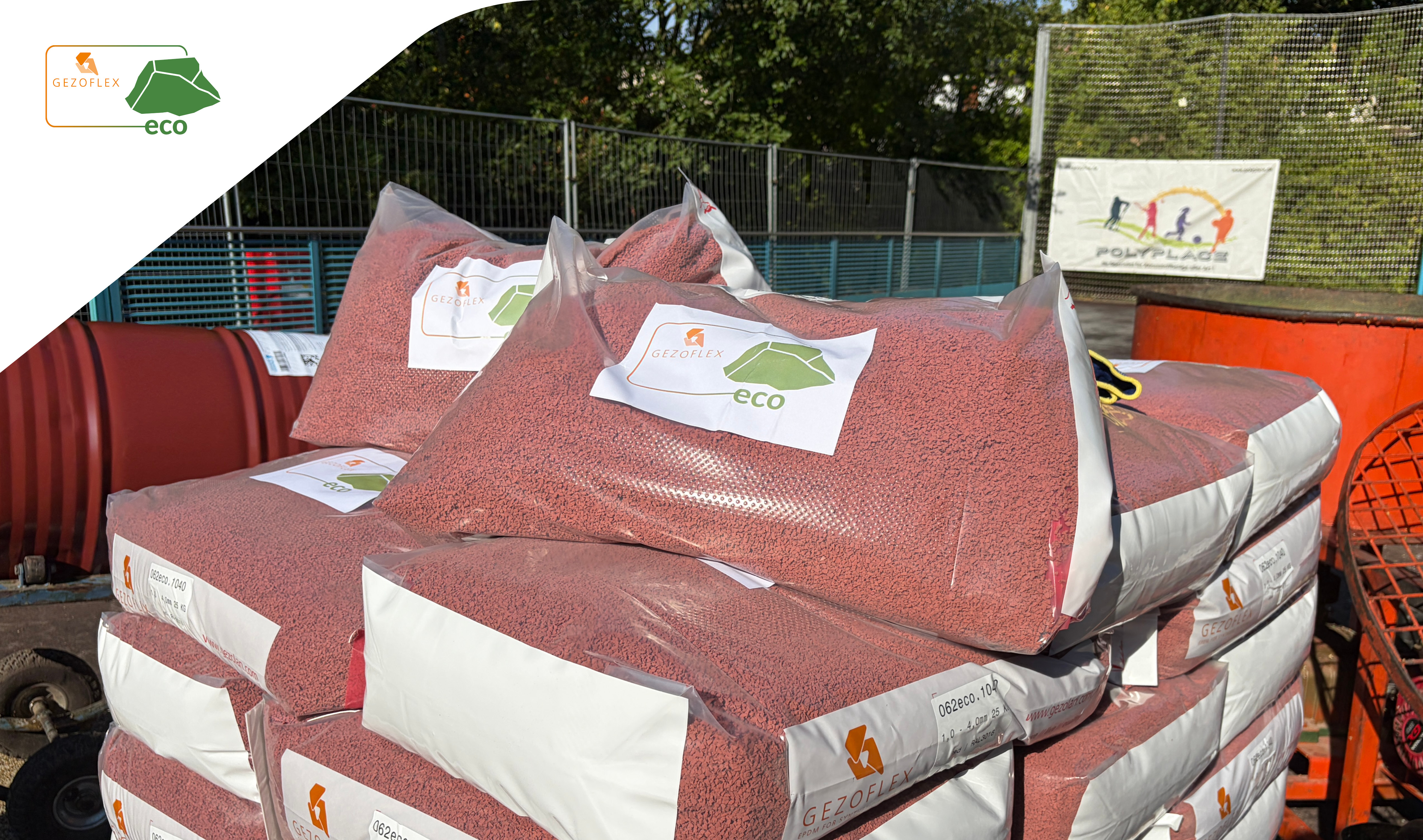
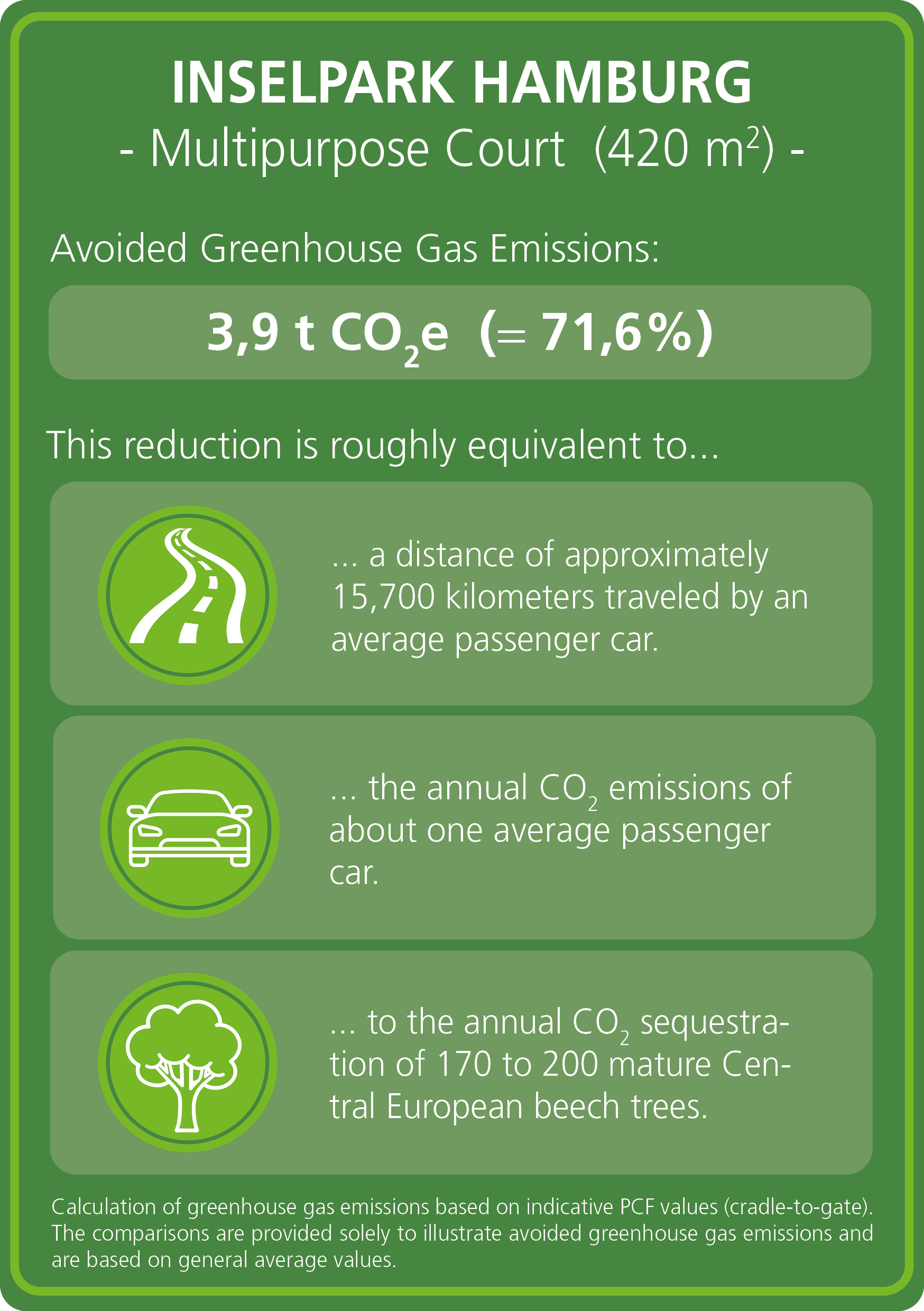
A total of 5,700 kg of GEZOFLEX eco in the color 062eco Red was used for the multipurpose court in Inselpark. Compared to the standard GEZOFLEX variant, the use of GEZOFLEX eco in this project avoided approximately 3.9 metric tons of greenhouse gas emissions based on indicative PCF values (cradle-to-gate). This corresponds to a 71.6% reduction in the product carbon footprint.
To illustrate, this reduction is roughly equivalent to the annual CO₂ emissions of about one average passenger cars or a distance of approximately 15,700 kilometers traveled by an average passenger car. Alternatively, it roughly corresponds to the annual CO₂ sequestration of 170 to 200 mature Central European beech trees. These comparative figures are provided for illustrative purposes only and are based on general averages.
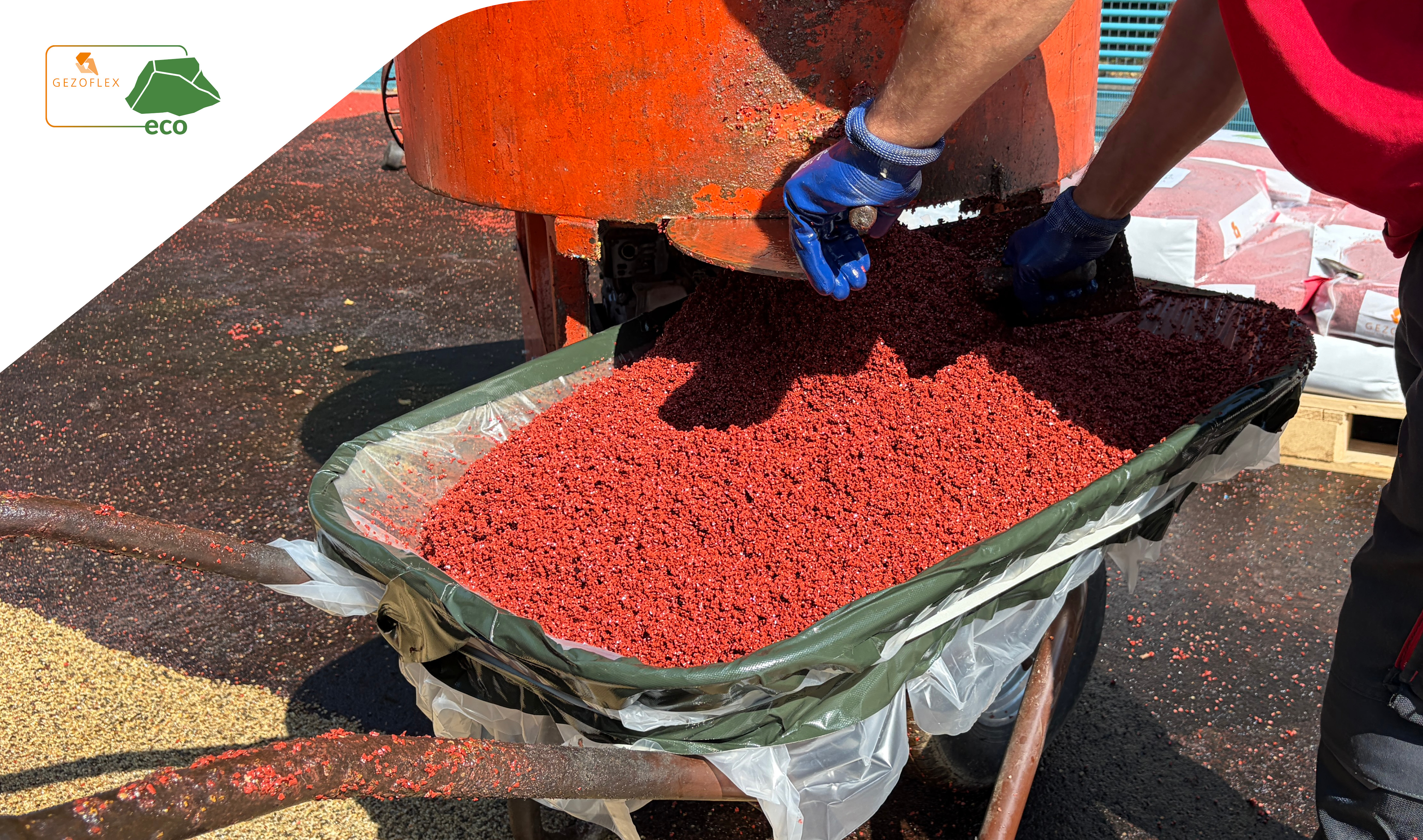
As the binder, Stobielast® S 1100 from » STOCKMEIER Urethanes GmbH & Co. KG was used. According to the manufacturer’s specifications, the binder contains 30% renewable raw materials, thereby helping to reduce dependence on conventional (crude oil-based) raw materials. Potential additional benefits regarding the reduction of greenhouse gas emissions are not taken into account in the calculation provided. The key figures on the reduction of greenhouse gas emissions thus explicitly refer to a comparison of the Product Carbon Footprint of the GEZOFLEX granules used and not to the carbon footprint of the entire construction project. However, even in this comparatively compact project, they clearly demonstrate the impact that a conscious choice of materials can have.
Material selection as a lever for greater sustainability
For municipalities, planning firms, and operators of sports and leisure facilities in particular, the flagship project in Hamburg at Inselpark Wilhelmsburg provides a practical example of how more sustainable planning can be implemented in concrete terms. After all, it is not just large-scale sports facilities that offer potential for savings. Even compact activity areas can make a measurable contribution to greater sustainability through the targeted selection of materials used.
Special thanks go to our partner » PolyPlace GmbH for the expert and professional installation, as well as for allowing us to document the installation process on camera.
More References?
You are looking for more ideas and inspiration?
Click here to go straight back to the overview of our references.
References overview


